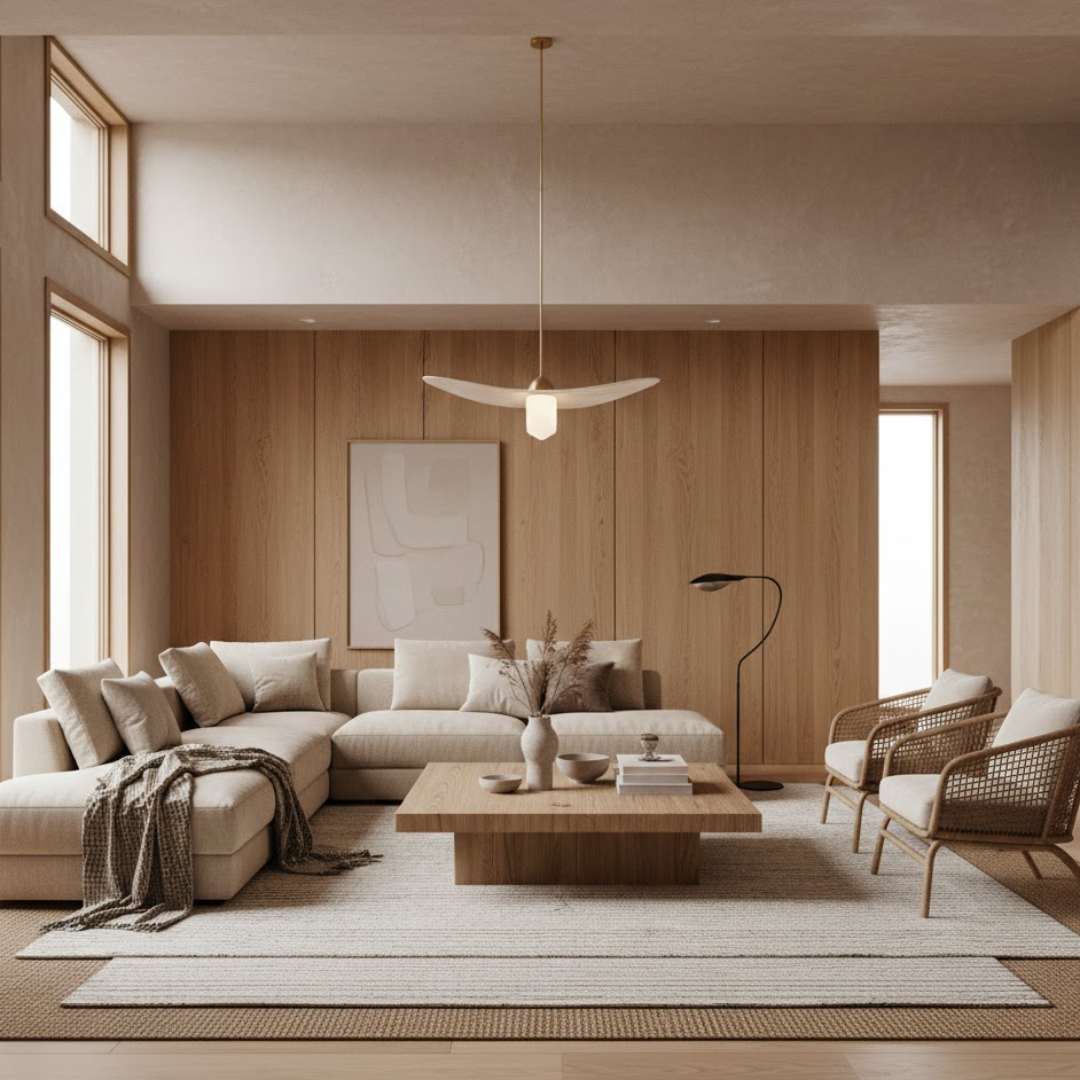
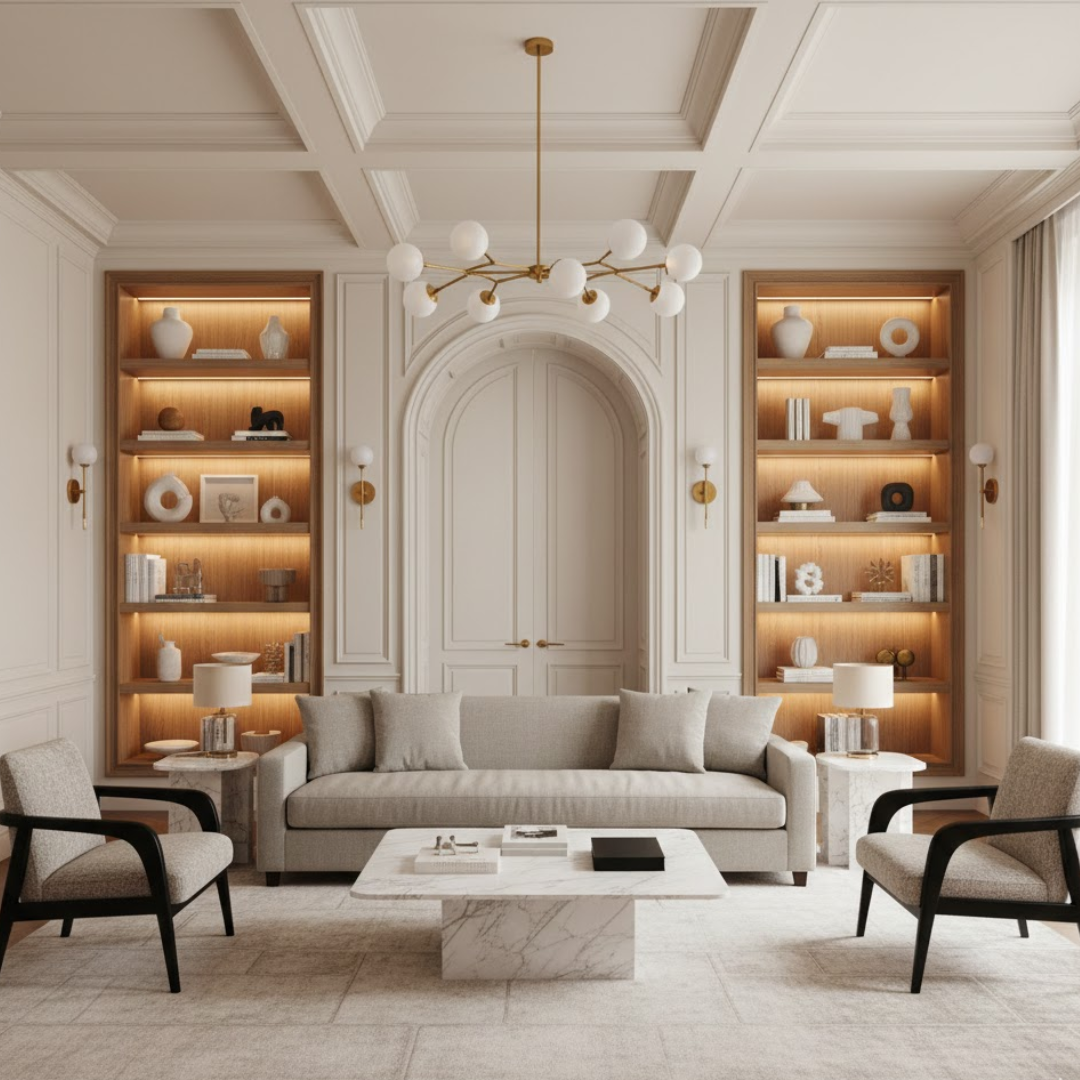
Transitional living room ideas are ideal for those who appreciate both classic design and modern simplicity. Rather than committing to one era or aesthetic, transitional interiors bridge the gap between traditional warmth and contemporary restraint.
The result is a living room that feels timeless, flexible, and easy to live in. Transitional design is less about following rules and more about creating balance – where comfort, proportion, and subtle elegance work together naturally.
What Defines a Transitional Living Room?
A transitional living room blends traditional architectural elements with modern finishes and clean-lined furniture. Mouldings, symmetry, and classic layouts may remain, but ornamentation is pared back.
Unlike trend-driven styles, transitional design focuses on longevity. Furniture silhouettes are familiar yet refined, and decorative details are understated rather than bold.
This approach allows the space to evolve over time, accommodating changing tastes without requiring a complete redesign. Transitional interiors are often featured in Houzz as examples of enduring, adaptable design.
Colour Palettes for Transitional Living Rooms
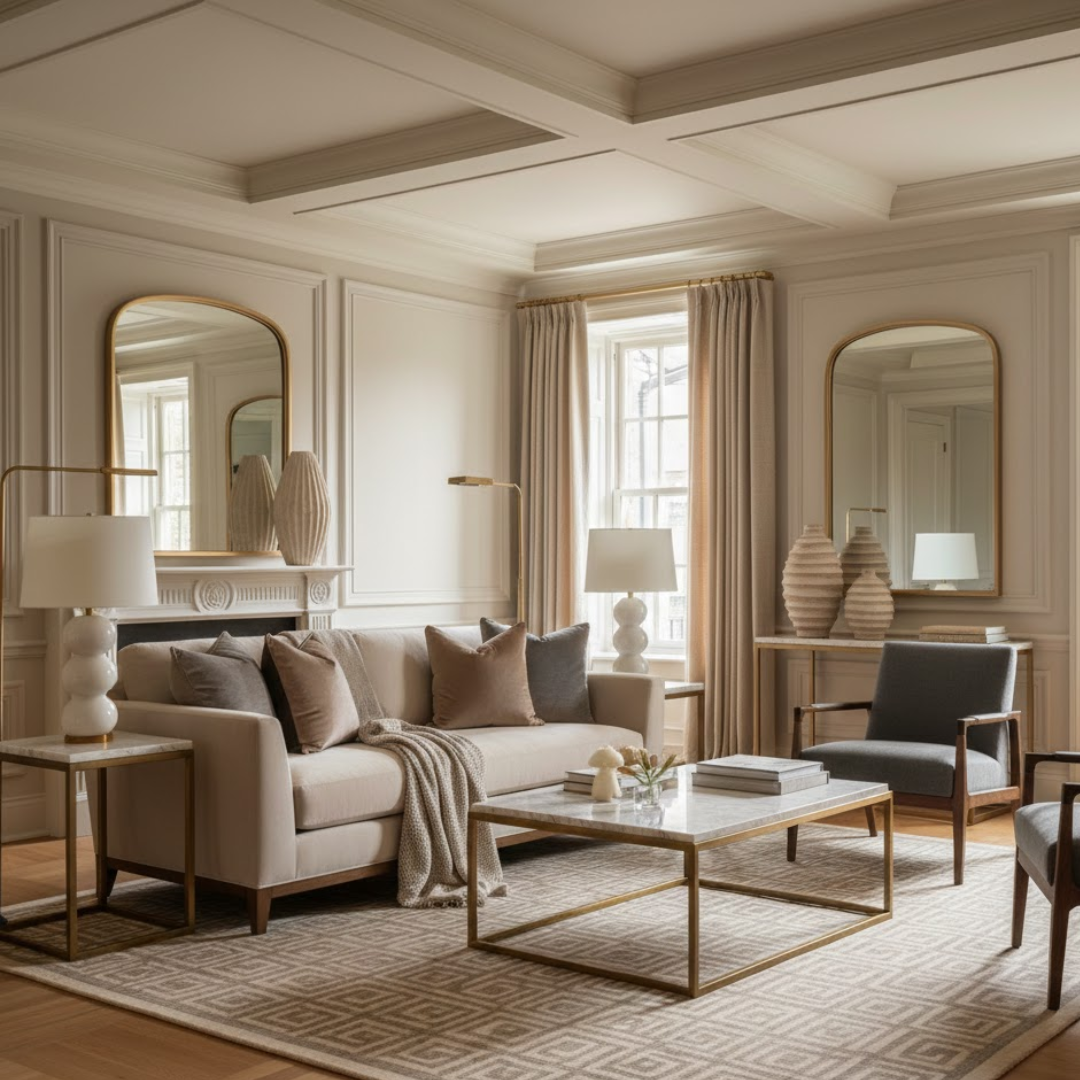
Neutral colour palettes are central to transitional living room ideas. Shades such as soft beige, warm grey, cream, and taupe create a calm, cohesive base.
Neutral colour palettes are central to transitional living room ideas. Shades such as soft beige, warm grey, cream, and taupe create a calm, cohesive base.
Occasional accent colours, such as muted blue, charcoal, or soft green, are used sparingly through cushions, artwork, or upholstery to introduce interest while maintaining balance.
Furniture Choices for a Transitional Look
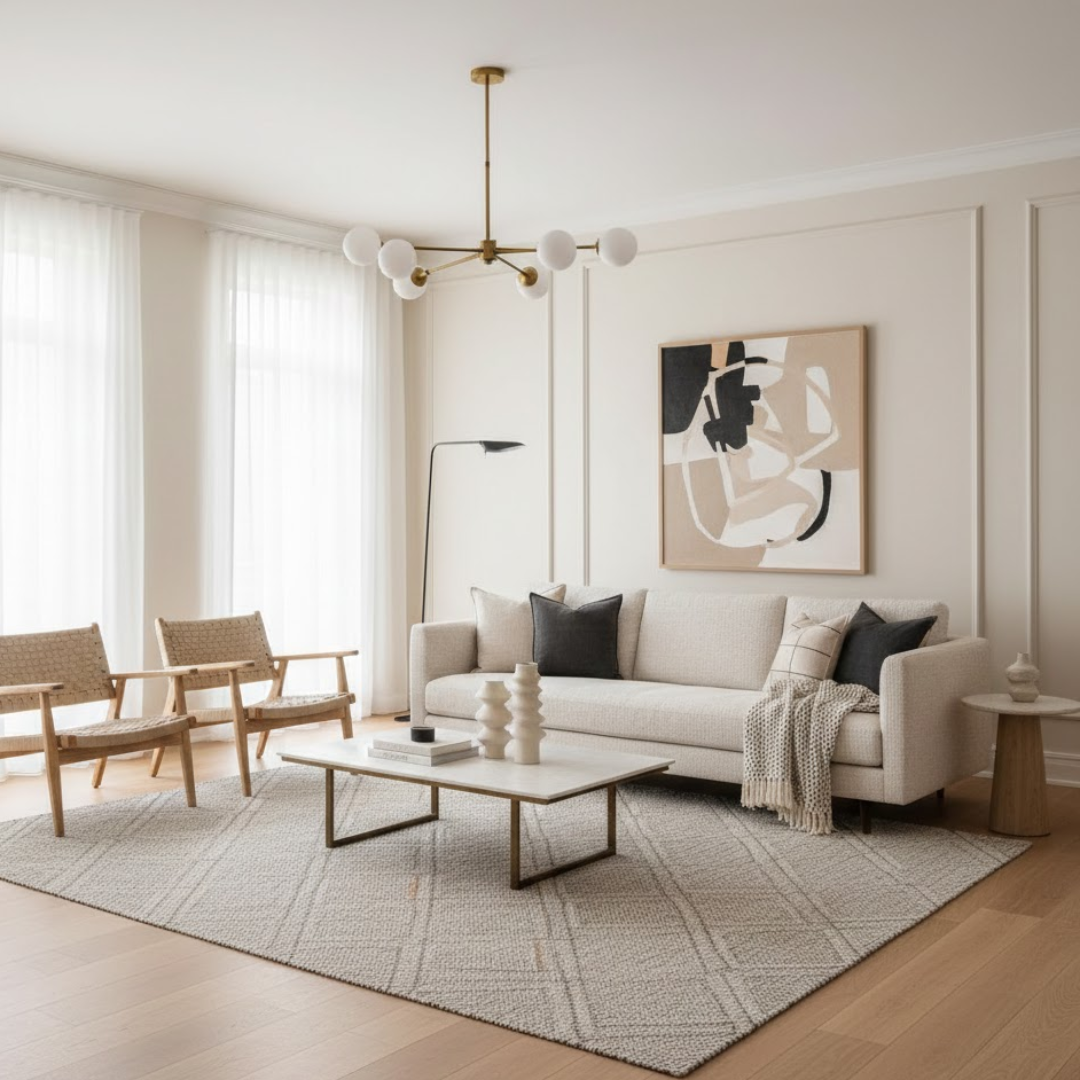
Furniture in transitional living rooms strikes a balance between classic comfort and modern form. Sofas are typically tailored but inviting, with clean lines softened by plush cushions.
Wood furniture often features simple detailing, avoiding heavy ornamentation. Coffee tables, sideboards, and shelving may reference traditional shapes but with streamlined profiles.
Rather than matching sets, transitional spaces mix complementary pieces. This creates a layered, collected look that feels intentional without appearing styled.
Textures and Decor Accents for Transitional Living Rooms
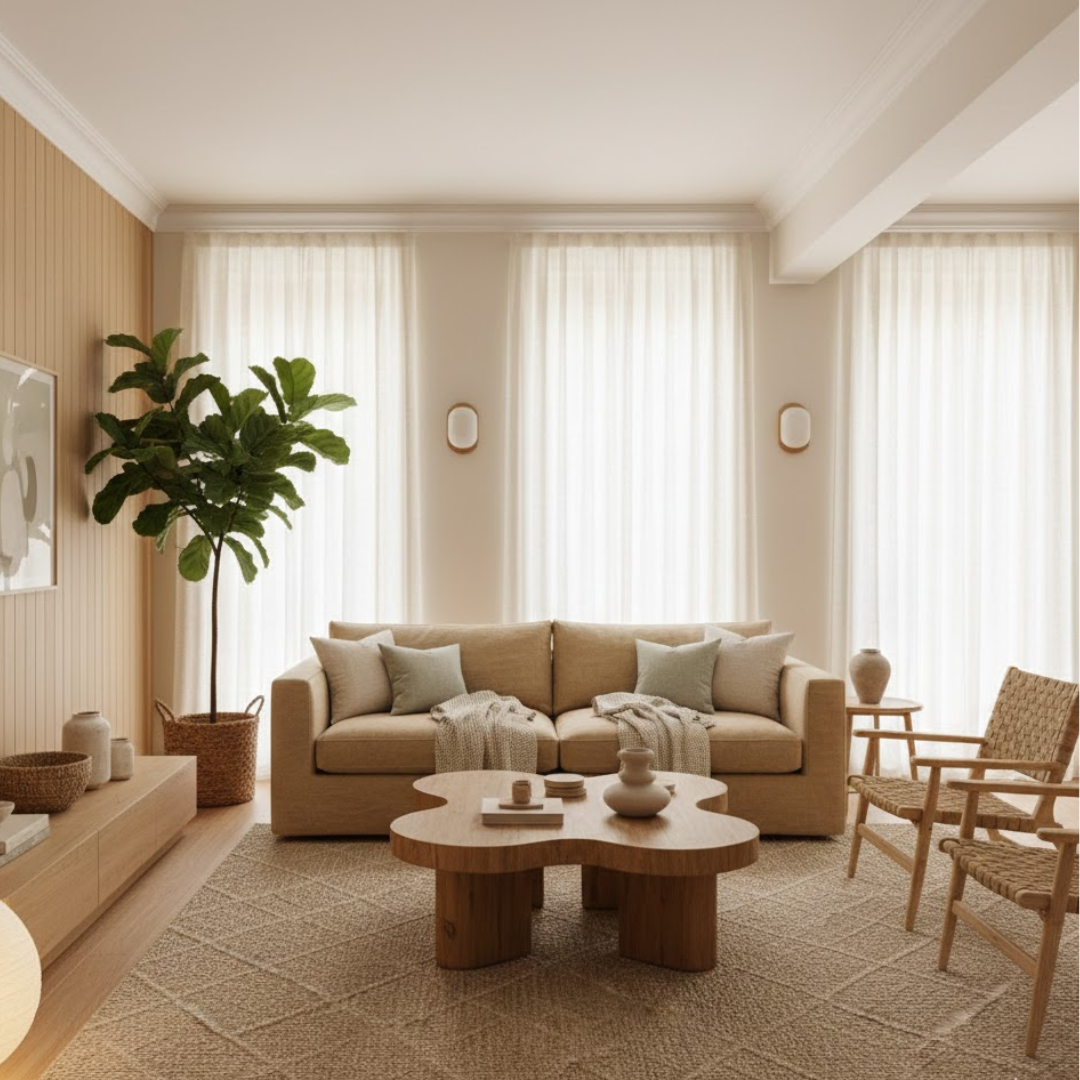
Texture plays a key role in adding warmth and dimension to transitional interiors. Upholstered furniture, woven rugs, and soft window treatments create a sense of comfort.
Decor accents are refined and restrained. Table lamps, mirrors, and artwork are chosen for proportion and placement rather than decoration alone.
Compared to styles like Japandi Living Room Ideas, which lean heavily into minimalism, transitional decor allows for a slightly richer, more familiar aesthetic – without visual clutter.
How to Style Transitional Living Room Ideas for Everyday Living
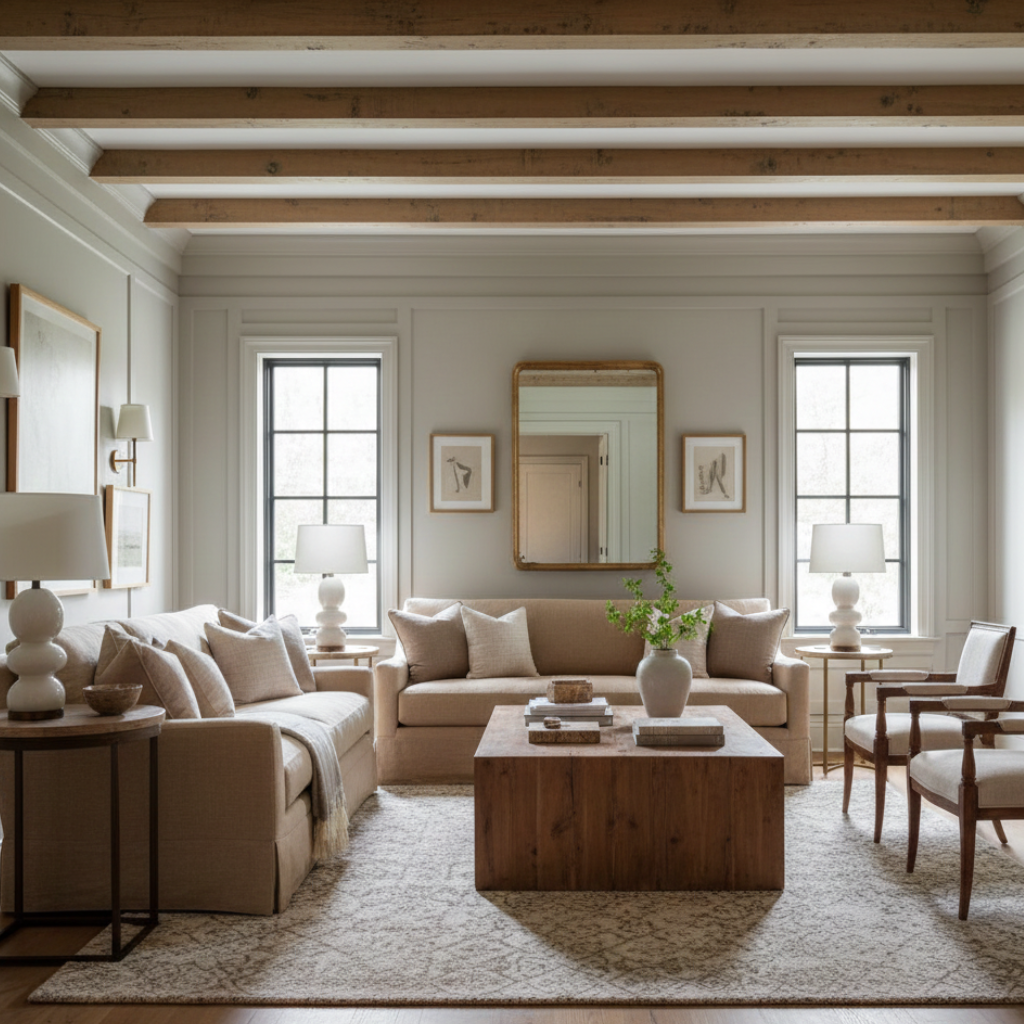
Styling transitional living room ideas starts with thoughtful layout. Furniture is arranged to encourage conversation and flow, often centered around a focal point such as a fireplace or coffee table.
Transitional living room ideas work best when styling feels intentional but not overly designed. The goal is balance rather than contrast. Each element should feel connected, even if it leans slightly traditional or modern on its own.
Start with symmetry, then soften it. Matching sofas or chairs create structure, while layered cushions, relaxed throws, or an off-centre coffee table prevent the room from feeling too formal. This balance is what gives transitional spaces their lived-in elegance.
Lighting also plays a quiet but important role. Table lamps with classic shapes paired with modern floor lamps help bridge eras visually. Warm, diffused light enhances neutral finishes and makes the space feel welcoming throughout the day.
Accessories should be edited carefully. A few well-chosen pieces on each surface help maintain clarity while still allowing personality to show through.
Final Styling Tips for Transitional Living Rooms
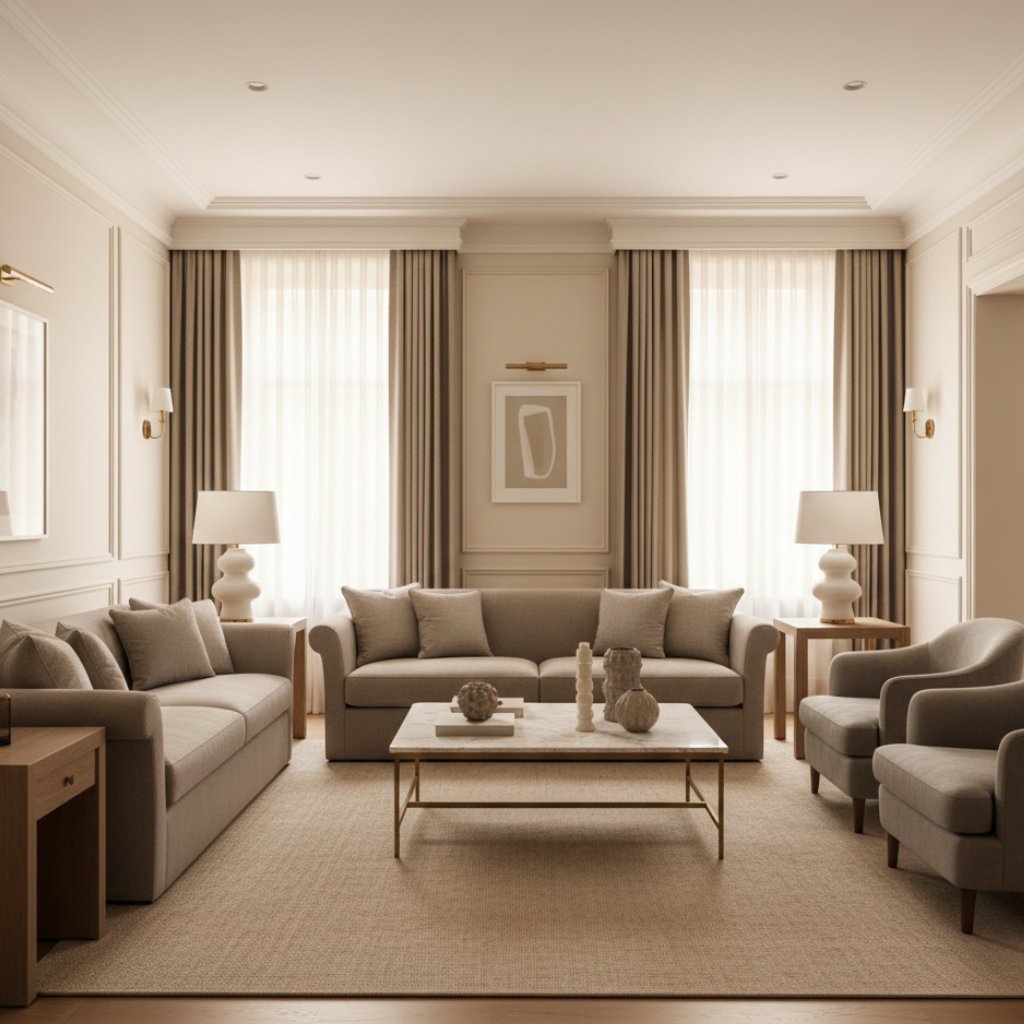
One of the strengths of transitional living room ideas is their flexibility over time. As trends shift, these spaces adapt easily without needing a full redesign. Swapping accent cushions, updating artwork, or introducing a new material finish can refresh the room while keeping the foundation intact.
Avoid overly bold statements that lock the space into one era. Instead, focus on proportion, texture, and restraint. Transitional interiors feel timeless because they rely on composition rather than decoration alone.
This adaptability is what makes transitional living room ideas so enduring – they evolve with you while maintaining a sense of calm and refinement.